Circulation is the job notoginseng is known for. In Chinese medicine the raw root "moves blood", and the modern trials test that idea by measuring platelets, clotting proteins and how thick the blood is. Nearly every trial used a standardised saponin product in a Chinese hospital, most often Xuesaitong capsules or an injection, taken on top of the person's usual medicines. This guide reads those trials in plain words and says what each one used.
Four Words the Trials Use
Platelet aggregation is platelets clumping together, the first step of a clot. Thromboxane is a signal that platelets release to call more platelets to the clump; trials measure its stable breakdown product, TXB2. Fibrinogen is the blood protein that turns into fibrin, the mesh that holds a clot together. Blood viscosity is how thick the blood is, and so how easily it flows through small vessels.
It Lowers Platelet Clumping Across 36 Trials
A 2017 review of 36 trials found notoginseng saponin preparations lowered the platelet aggregation rate against placebo and against drugs that do not act on platelets (Li 2017). Added to antiplatelet drugs such as aspirin, the preparations lowered aggregation and TXB2 further, and bleeding events did not rise. The review is in a Chinese language journal, gives no pooled participant count, and its authors called the trial quality poor. Across the 36 trials the direction was the same: fewer platelets clumping.
It Adds to Aspirin in Heart Disease and Stroke
A 2022 review of 20 trials in 2,216 people with coronary heart disease or ischemic stroke compared notoginseng preparations plus aspirin with aspirin alone (Dai 2022). Products made from the full saponin mix lowered the platelet aggregation rate by a further 6.10 points, and panaxatriol saponin products by 3.53 points; the full mix also lowered fibrinogen and D-dimer, a marker of clots being broken down. Bleeding events, from blood in the stool to skin and eye bleeds and blood in the urine, were no more common than on aspirin alone, and neither were stomach side effects or hives.
A 2021 trial of 42 people with stable coronary heart disease and chronic gastritis gave aspirin alone or aspirin plus notoginseng saponins for 2 months (Wang 2021). The combination inhibited platelet clumping more, lowered TXB2, and eased indigestion symptoms. The trial was small, and the assessors rather than the patients were blinded.
It Matched Aspirin in People with Thick Blood
A 2004 double-blind trial of 120 people with blood hyperviscosity syndrome, a diagnosis used in Chinese hospitals for thick, sluggish blood, compared Xuesaitong capsules with aspirin for 28 days (Wang 2004). On the symptom score 86.67 percent responded on the capsule against 56.67 percent on aspirin. Both groups lowered platelet adhesion, aggregation and thromboxane; the capsule also lowered CD62P and CD41, two markers on the platelet surface that show it has switched on, which aspirin did not. The report is in a Chinese language journal and the trial ran four weeks.
It Thins Sticky Blood in Lung Disease
A 2024 review of 20 trials in 1,831 people with chronic obstructive pulmonary disease and hypercoagulable blood found notoginseng saponin preparations lowered fibrinogen, D-dimer, whole blood viscosity at high and low flow, and plasma viscosity (Zhou 2024). The standard lab clotting times did not change, so the blood flowed better without the clotting system being switched off, and bleeding did not rise. Blood oxygen rose and lung function improved. The preparations were hospital saponin products, and every trial was in China.
It Helped Legs with Blocked Arteries, in One Trial
A 2014 trial of 52 people with critical limb ischemia that surgery could not repair gave everyone a transplant of their own mobilised blood cells, and half also took notoginseng saponins for 16 weeks (Wang 2014). The saponin group had better blood pressure at the ankle, more oxygen at the skin, a longer 6-minute walk, smaller ulcers and less pain at rest. The trial was open label at a single centre, and side effects were mild and similar in both groups.
Why It Adds to Blood Thinners Rather Than Replacing Them
Aspirin blocks one enzyme, COX-1, so platelets make less thromboxane. Notoginseng saponins lowered thromboxane too, and also lowered the surface marker CD62P and the GPIIb-IIIa receptor, which aspirin left alone (Wang 2004, Wang 2021). Different pathways is why the trials found more platelet inhibition when the two were combined. It is also why every large trial tested the saponins on top of aspirin or standard care, never instead of it; the one head to head ran 28 days and measured symptoms, not strokes or heart attacks. The stroke results that build on this are in notoginseng for heart health.
What the Powder in the Shop Shares with the Trials
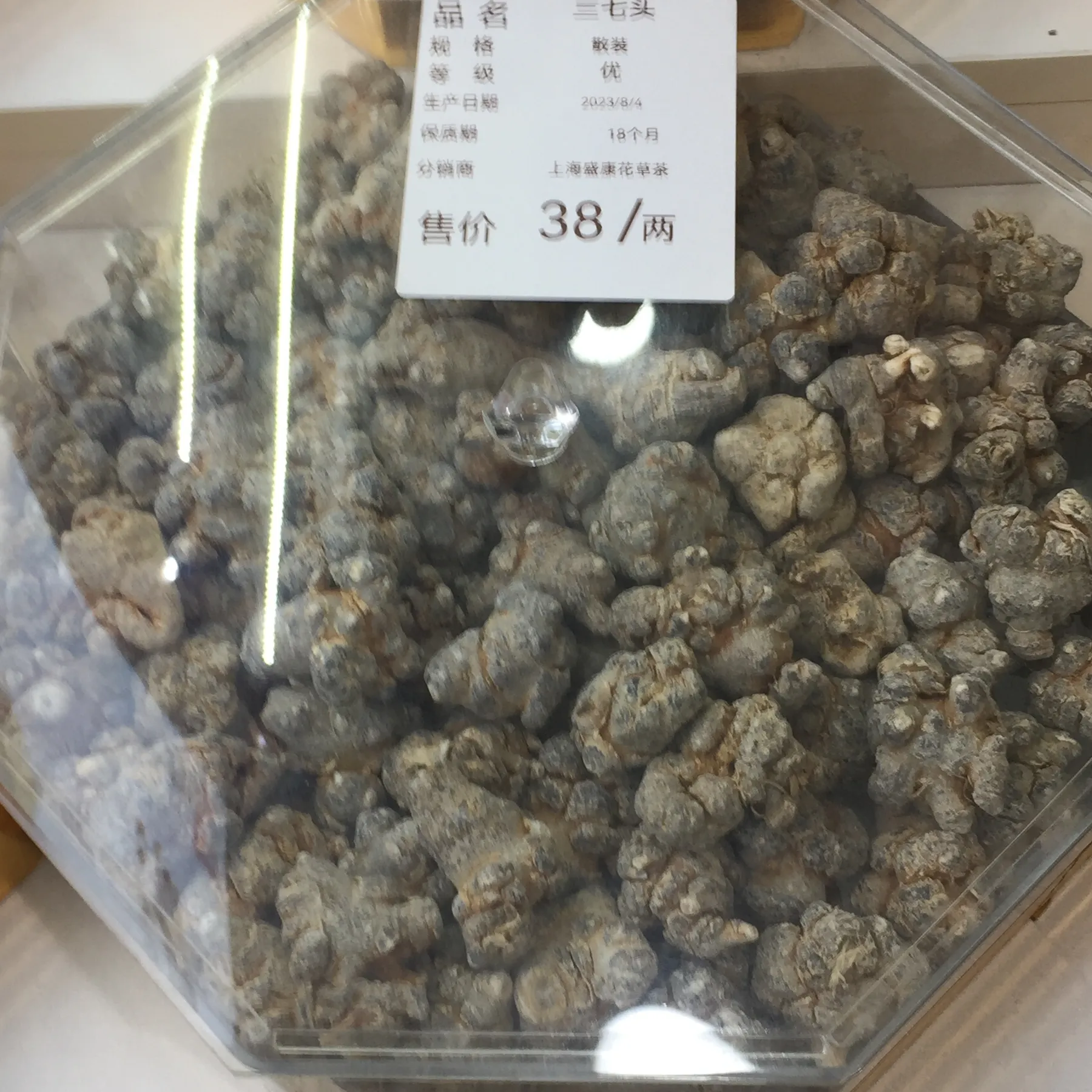
The platelet trials used saponin extracts standardised to milligrams of notoginsenosides. The powder and capsules sold as supplements are the whole raw root, with its saponins in their natural proportions alongside dencichine and the other compounds of the root. No trial in this set has measured platelets in people taking that powder. Raw vs steamed notoginseng explains the forms, and notoginseng dosage gives the amounts each trial used.
What Users Report
Many users say their hands and feet feel warmer after a few weeks on the powder. People often report that bruises fade faster. These are reports from people taking the root, not measurements from a trial.
Safety Notes
Talk with your doctor before taking notoginseng if you take warfarin, aspirin, clopidogrel or any blood thinner. Stop it before surgery. Avoid it in pregnancy and breastfeeding, where there are no trials. In the trials above, bleeding did not rise when saponins were added to aspirin (Dai 2022), and the 2021 trial found less indigestion with the combination than with aspirin alone (Wang 2021). More in notoginseng side effects.
Across these trials, notoginseng saponins lowered platelet clumping, fibrinogen and blood viscosity on top of standard care.
References
- Li Y et al. 2017. Effect of Panax notoginseng preparations on platelet function. Zhongguo Zhong Yao Za Zhi.
- Dai L et al. 2022. Panax notoginseng preparation plus aspirin versus aspirin alone on platelet aggregation and coagulation in patients with coronary heart disease or ischemic stroke: A meta-analysis of randomized controlled trials. Front Pharmacol.
- Wang W et al. 2021. Combination of Panax notoginseng saponins and aspirin potentiates platelet inhibition with alleviated gastric injury via modulating arachidonic acid metabolism. Biomed Pharmacother.
- Wang J et al. 2004. Effect of Radix notoginseng saponins on platelet activating molecule expression and aggregation in patients with blood hyperviscosity syndrome. Zhongguo Zhong Xi Yi Jie He Za Zhi.
- Zhou R et al. 2024. Clinical efficacy and safety of Panax notoginseng saponins in treating chronic obstructive pulmonary disease with blood hypercoagulability: A meta-analysis of randomized controlled trials. Phytomedicine.
- Wang X et al. 2014. Combination of autologous transplantation of G-CSF-mobilized peripheral blood mononuclear cells and Panax notoginseng saponins in the treatment of unreconstructable critical limb ischemia. Ann Vasc Surg.
Nothing here is medical advice. If you take prescription medication, talk with your doctor before adding notoginseng.